



 42 / 98

This year saw Vodacom
achieving a number of
significant milestones.
CFO’s
statement
We diversified the economic portfolio of the Group
with the acquisition of a stake in Safaricom in Kenya,
and we widened our shareholder reach through the
listing of Vodacom Tanzania, which attracted more
than 40 000 local individual investors. We delivered total
ZAR shareholder return of 6.2%, and will be returning a
total dividend of more than R14 billion back to
shareholders this year.
Our strategy of best network, best service and best value,
has resulted in our operations in South Africa, delivering
robust service revenue growth despite a low GDP growth
environment, while our International segment growth
also improved throughout the year. This growth was
supported by an additional 7 million customers coming
onto the Vodacom network across our operations.
The combined reach of Vodacom and Safaricom has
expanded to 103 million customers across Africa.
Net profit increased 18.6% to R15.6 billion, boosted
by the Helios Towers Tanzania sale and our share of
attributable profit from Safaricom. Safaricom contributed
R1.5 billion to profit for the first eight months, after
deducting the amortisation of fair valued assets.
Headline earnings per share (HEPS) remained constant
at 923 cents per share, impacted by the dilution from
233.5 million shares issued to acquire the Safaricom
stake. The Board resolved to declare a final dividend of
425 cents per share, bringing the full year dividend to
815 cents per share.
South Africa delivering under
economic uncertainty
Vodacom South Africa delivered service revenue
growth of 4.9%. This was achieved amidst a backdrop
of economic growth of ~ 1% during the year, and reduced
effective pricing in both voice and data through our
bundle strategy.
During the year, concerns surrounding South Africa’s
macroeconomic environment led to the sovereign credit
rating downgrade in April 2017. To manage the potential
interest rate volatility, we took a balanced and neutral
approach and re-negotiated our fixed-to-floating debt
exposure to ~ 50% on existing loans, thereby creating
stability in finance costs. This approach has provided us
with a natural hedge, allowing us to balance protection
when interest rates increase, as well as going with the
market when rates decrease.
Our pricing transformation strategy continues to show
progress. Reducing out-of-bundle spend for customers
has been core to this, and was achieved by improving
customer data usage notifications, reducing out-of-
bundle rates by as much as 50%, introducing more value
offers on contract plans, and increasing bundle adoption
through personalisation through ‘Just 4 You’. Our
strategy provides a more service-focused approach that
presents customers with specific bundles to suit their
individual needs.
The opportunity for data growth remains strong building
on the 12.8% growth achieved in the context of changes
in out-of-bundle rates. In the year ahead, the focus will
shift to implementing ICASA’s recently published
End-User and Subscriber Service Charter Regulations,
which will reduce out-of-bundle spend and exposure for
customers. We will offset the negative financial impact
through elasticity, driving our data device strategy, and
other commercial actions through our personalised
bundle offers to customers. Although these actions have
a short-term impact on revenue growth, we believe that,
together with our bundle strategy, they are necessary to
ensure sustainable growth. What makes me confident is
that our average smart device usage of 784 MB per user
is still three to four times lower than in many other
developed markets.
Our Enterprise strategy to deliver a holistic product
offering to business has reported double-digit growth at
10.8%, now contributing 25.7% to our revenues. Service
revenue from fixed services increased 55.6%, driven by
the inclusion of wholesale transit revenue (a new low
margin business) connectivity revenue, and Cloud and
Hosting services. Enterprise mobile customer revenue
was flat with a slow take-up amongst new departments
as part of the government contract we were awarded in
September 2016. The sign-up of new departments is set
to offset the increased discounts as part of this contract,
and it is expected that the sign-up from these contracts
will accelerate in the year ahead.
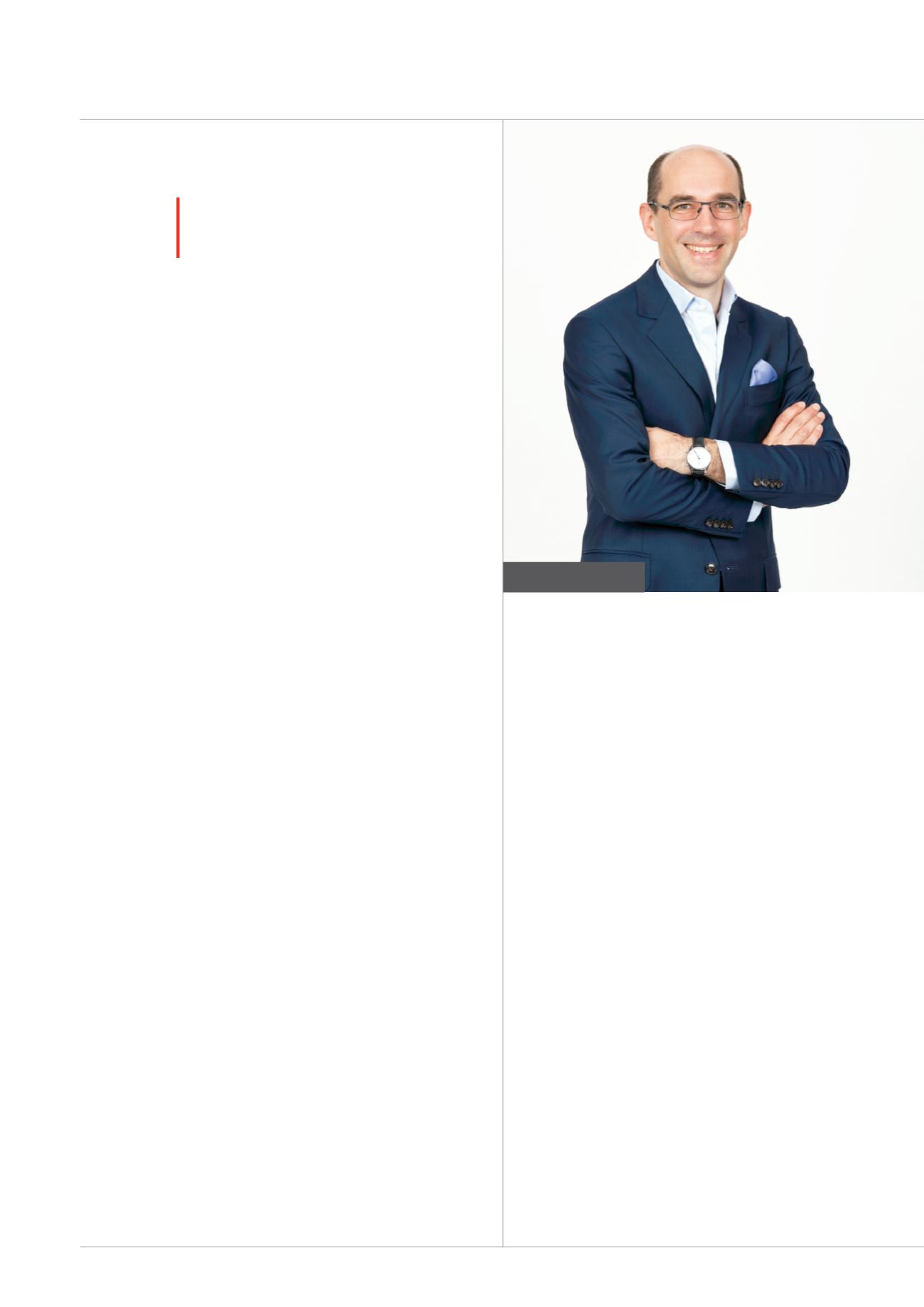
Till Streicher t
38
Vodacom Group Limited
Integrated report for the year ended 31 March 2018